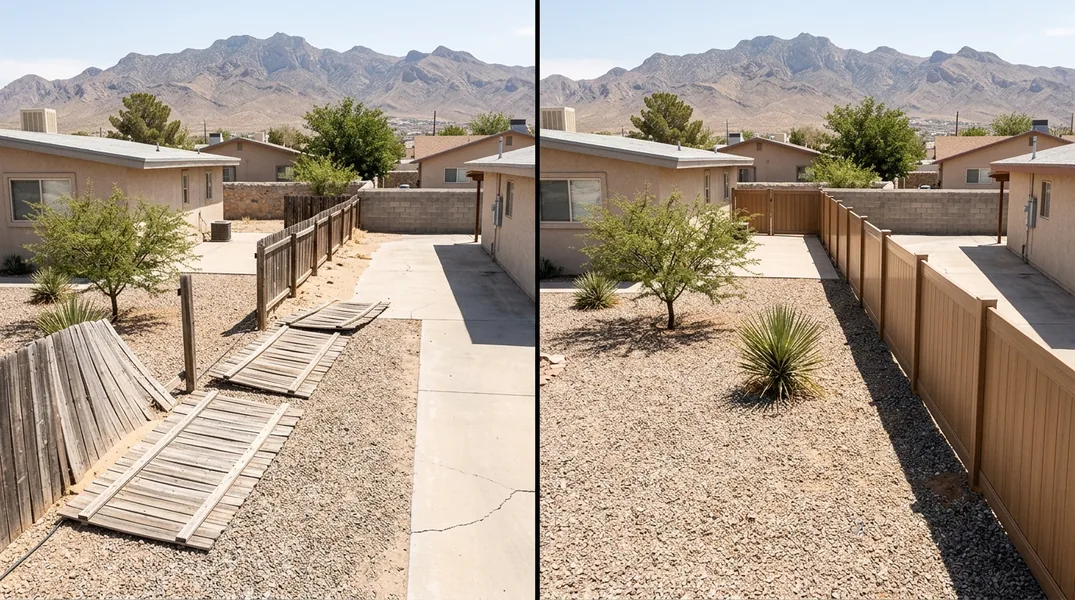
Understanding Dust Storm Fence Damage in El Paso
El Paso is no stranger to severe dust storms, especially during spring and early summer. These powerful weather events can arrive with little warning, bringing winds that exceed 50 mph and reducing visibility to near zero. What many homeowners don't realize is that these same winds can wreak havoc on residential fencing, leaving panels cracked, posts uprooted, and entire sections of fence lying flat on the ground.
Dust storms present a unique challenge to fence structures because of their sudden intensity and the combination of wind force and abrasive sand particles. A fence that has withstood years of regular weather can be compromised in minutes when a haboob rolls through. The damage isn't always uniform either. One section of your fence might suffer catastrophic failure while an adjacent section remains standing, creating an uneven and sometimes unsafe situation. Understanding what happened to your fence is the first step toward addressing the problem effectively.
What to Do Immediately After Your Fence Blows Down
The moments immediately following a dust storm are critical for protecting your property and documenting damage for insurance purposes. Your first priority should be safety. If your fence has partially collapsed or is leaning dangerously, keep family members and pets away from the damaged area until it can be properly assessed. Sharp wood splinters, protruding nails, and unstable panels pose real injury risks that shouldn't be ignored.
Next, document everything with photographs and video. Take clear shots of the damage from multiple angles, including close-ups of broken boards, bent posts, and any debris scattered across your yard. Capture images of the surrounding area as well, showing where panels have fallen and how the damage relates to your property and your neighbors' properties. This photographic evidence is invaluable when filing an insurance claim and will be requested by your insurance adjuster. Write down the date and time of the storm, wind speed if available, and any other relevant details while they're fresh in your mind.
Before making any repairs or removing debris, contact your homeowners insurance company. Many policies require notification within a specific timeframe, and jumping ahead with repairs before the claim is filed could complicate the process. Ask your insurance agent what documentation they need and whether you should obtain estimates from local contractors before proceeding with repairs.
Does Homeowners Insurance Cover Fence Damage from Storms?
This is the question on every homeowner's mind after a dust storm damages their fence. The answer is nuanced: homeowners insurance may cover fence damage, but it depends heavily on your specific policy, the cause of the damage, and your deductible. Most standard homeowners insurance policies do include some coverage for fence damage caused by covered perils like windstorms, hail, or lightning. However, damage from normal wear and tear, lack of maintenance, or gradual deterioration is typically not covered.
The key factor is whether the damage resulted from a sudden, accidental event. A dust storm that knocks down your fence qualifies as a sudden event, which makes it a candidate for coverage under the windstorm or comprehensive damage section of your policy. However, if your fence was already weakened by rot, poor installation, or years of neglect, your insurance company might argue that the storm simply accelerated inevitable failure. This is why proper maintenance and professional installation matter.
Your deductible will also significantly impact what you actually receive in benefits. If your policy has a $1,000 deductible and the repair cost is $1,500, you'll pay the first $1,000 and insurance covers $500. Some homeowners policies have separate deductibles for wind or storm damage, which can be higher than your standard deductible. Review your policy documents carefully or call your insurance agent to understand exactly what's covered and what your out-of-pocket costs might be.
Filing Your Insurance Claim for Wind Damage Fence Repair
Filing an insurance claim for wind damage fence repair requires organization and attention to detail. Start by contacting your insurance company's claims department as soon as possible after the storm. Provide them with the date of the damage, a description of what happened, and your policy number. The representative will explain the claims process and may schedule an adjuster to inspect the damage in person.
When the adjuster arrives, walk them through the damage systematically. Point out how the fence failed, show them the photographic documentation you collected, and explain any relevant context about the fence's age and condition. Be honest about the condition of the fence before the storm. If you've been maintaining it well, say so. If there were pre-existing issues, disclose them. Attempting to hide information or exaggerate damage typically backfires and can result in claim denial.
Obtain repair estimates from qualified local contractors before or shortly after the claim inspection. Most insurance companies expect at least one estimate, though having two or three gives you more negotiating power. These estimates should be detailed and itemized, showing the cost of materials, labor, and any other expenses. When you submit your claim, include these estimates along with all photographic evidence and any other documentation the adjuster requested.
Professional Fence Repair and Replacement Options Near Me
Once your insurance claim is processed and you understand your coverage, you'll need to decide on repair versus replacement. Sometimes a fence can be partially repaired, with damaged sections replaced while the rest of the structure remains intact. Other times, the damage is so extensive that complete replacement makes more sense financially and aesthetically. Wood & Privacy Fence Installation is a popular choice for homeowners in El Paso because it offers a classic look and solid performance when properly installed and maintained.
If your original fence was wood, you might consider alternative materials that offer better wind resistance. Vinyl & PVC Fence Installation provides excellent durability and requires minimal maintenance. Chain Link Fence Installation is another durable option that stands up well to high winds, and Aluminum & Ornamental Iron Fencing combines elegance with strength. Each material has different cost considerations, maintenance requirements, and aesthetic qualities.
The quality of installation is just as important as the material choice. A poorly installed fence, regardless of material, will be more vulnerable to wind damage in future storms. When selecting a contractor, verify they're insured, and experienced with storm recovery work. Ask for references and check their track record in your community. El Paso Fence Company has extensive experience repairing and installing fences that withstand the region's challenging weather conditions. Call (915) 621-2956 to discuss your options and get a free estimate for your project.
Preventing Future Storm Damage: Maintenance and Installation Tips
While you can't prevent dust storms, you can take steps to make your fence more resilient to wind damage. Regular maintenance is your first line of defense. Inspect your fence at least twice a year, looking for loose boards, cracked posts, rusted hardware, and signs of rot or insect damage. Address these issues promptly rather than waiting for a storm to expose them. Tighten loose fasteners, replace damaged boards, and treat wood with appropriate sealants to prevent deterioration.
Proper installation is equally critical. Posts should be set deep enough in concrete footings to provide adequate support. The depth depends on the height of the fence and the type of soil, but typically posts need to be buried at least one-third of their length. Boards or panels should be securely fastened with appropriate hardware, and spacing should allow some wind to pass through rather than creating a solid wall that catches wind like a sail. When replacing your fence after storm damage, ensure the contractor follows these best practices.
Consider the layout of your fence relative to prevailing wind patterns. If your fence runs perpendicular to the direction of typical dust storms, it will experience more direct force. While you can't always change the fence's direction, you can ensure it's built to withstand forces from all directions. Additionally, keeping vegetation trimmed back from the fence line improves air circulation and reduces the risk of branches damaging the fence during high winds.
Looking for a professional fence contractor in El Paso? El Paso Fence Company responds fast for all your fence needs.
Get a Free Quote